Thank you for writing to us. One of our executive will reach back to you through your submitted medium. In case there’s an urgency, feel free to connect over WhatsApp for faster response.
Prefer calling? Dial +918048035233 (International callers) or 08048035233 (Indian callers).
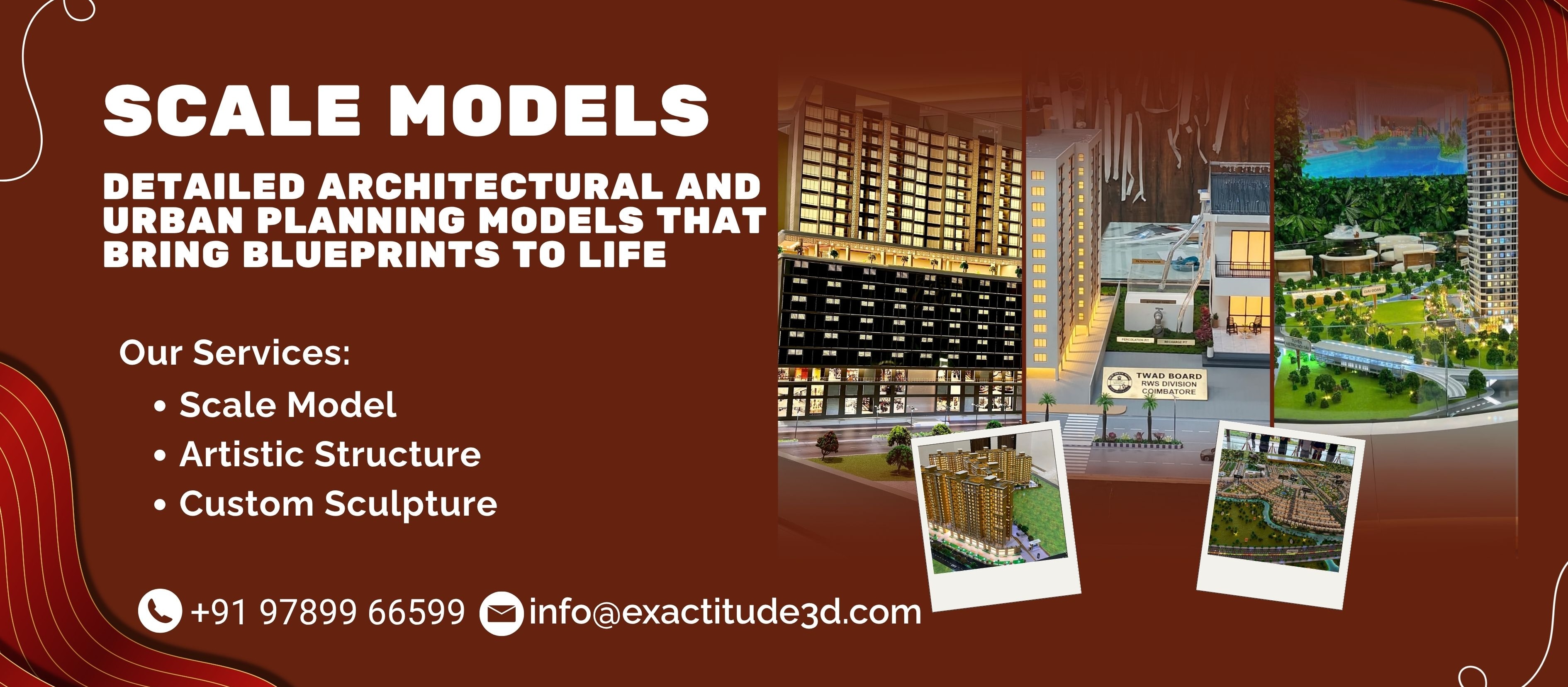
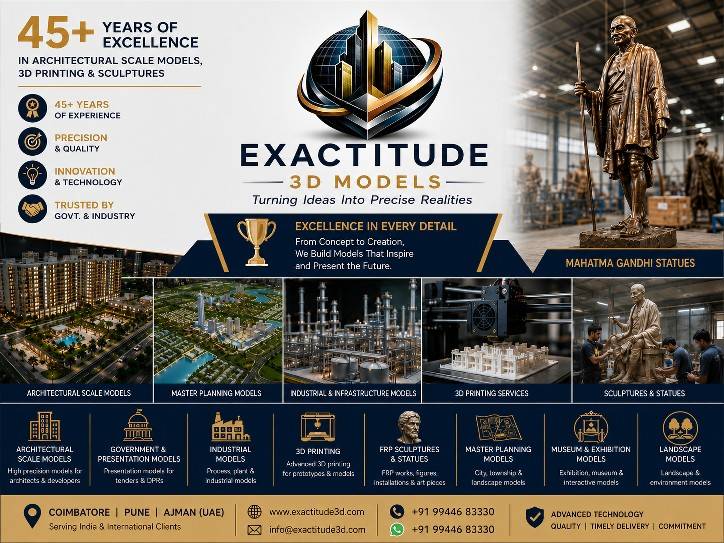
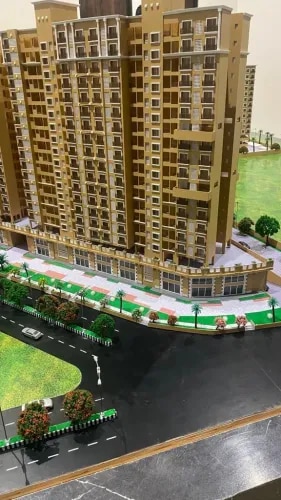
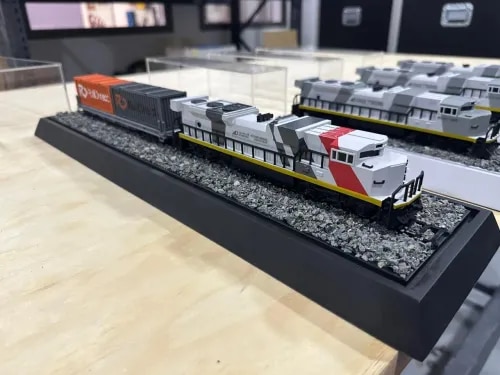
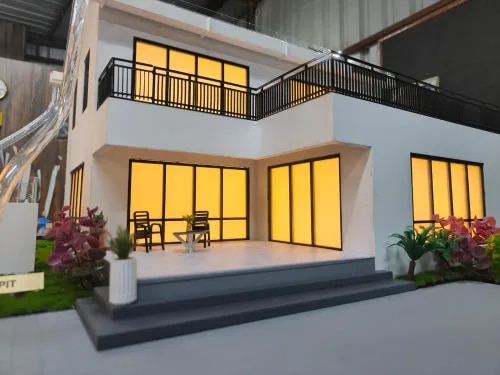
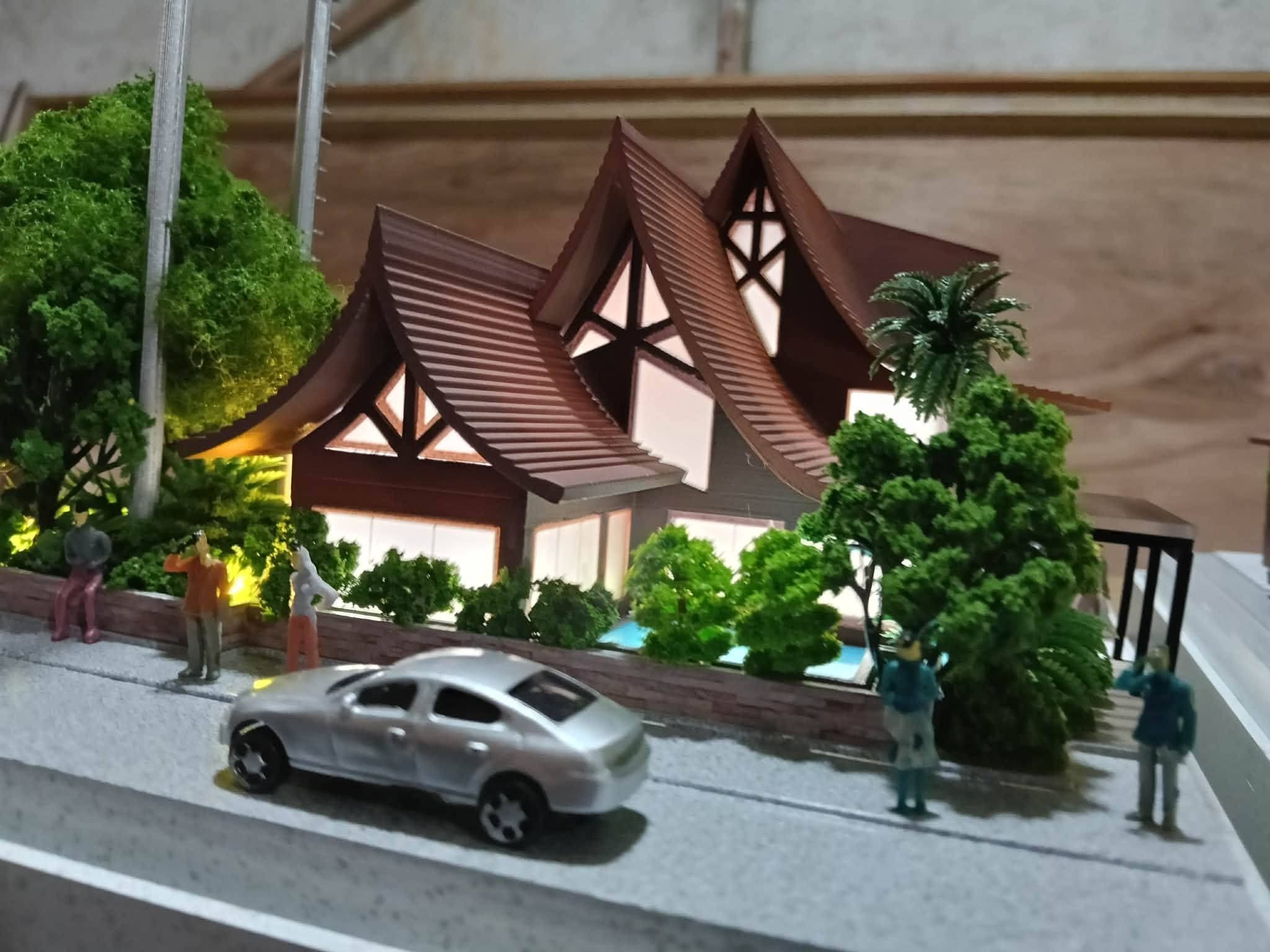
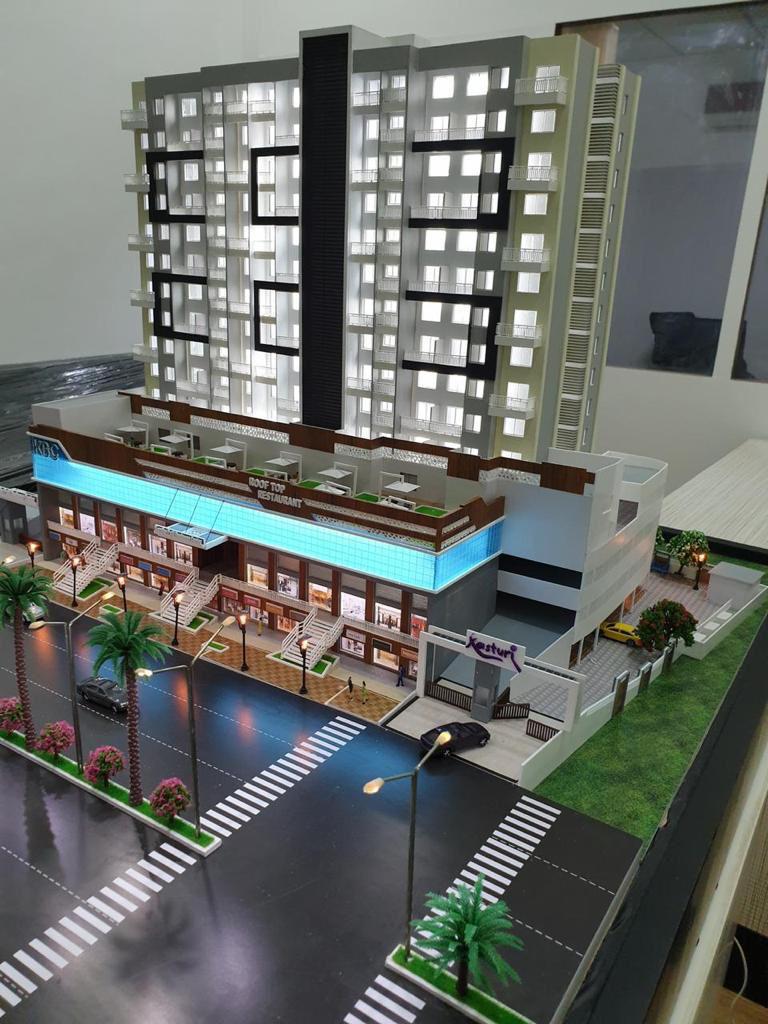
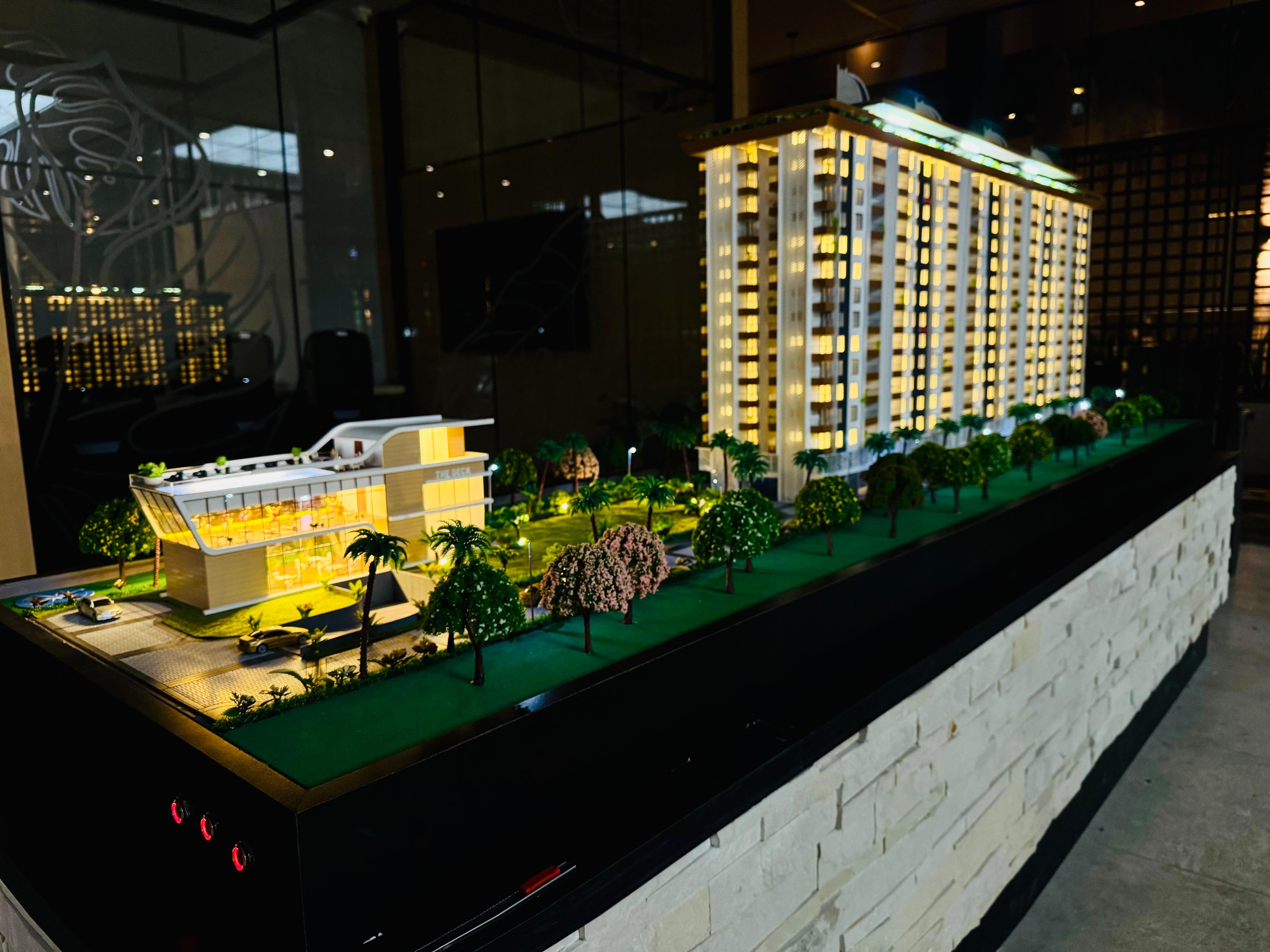
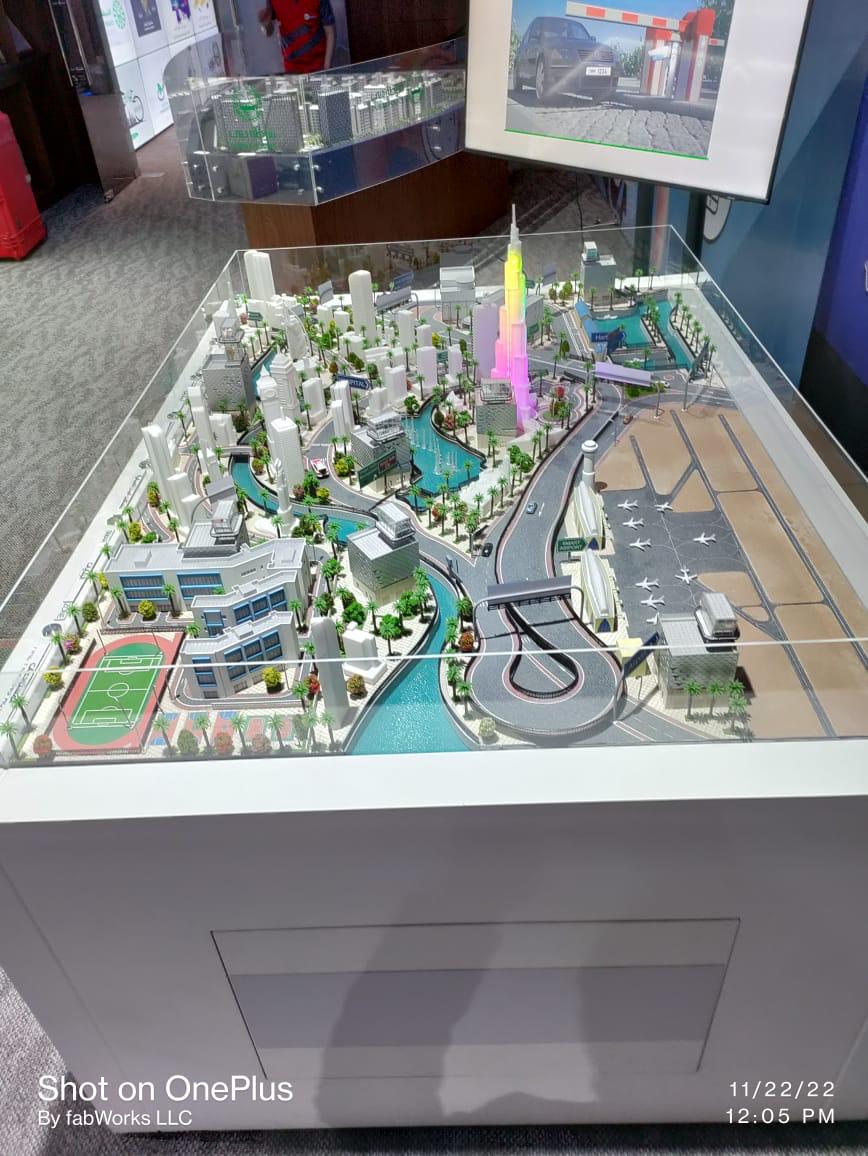
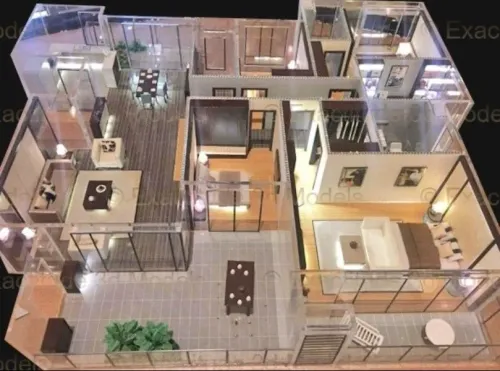
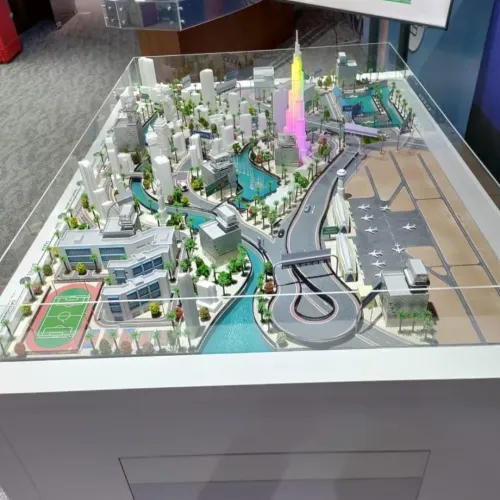
Scale architectural models are accurate three-dimensional miniature representations of buildings, master plans, townships, industrial facilities, or infrastructure projects, built to a defined scale such as 1:50, 1:100, 1:200, or 1:500. They help architects, developers, government agencies, and investors visualize the design, understand spatial relationships, evaluate aesthetics, and communicate project concepts before construction begins.
These models are widely used for project presentations, approvals, exhibitions, public consultations, marketing, and investment proposals, offering a realistic and tangible representation that drawings and digital renderings alone cannot provide.
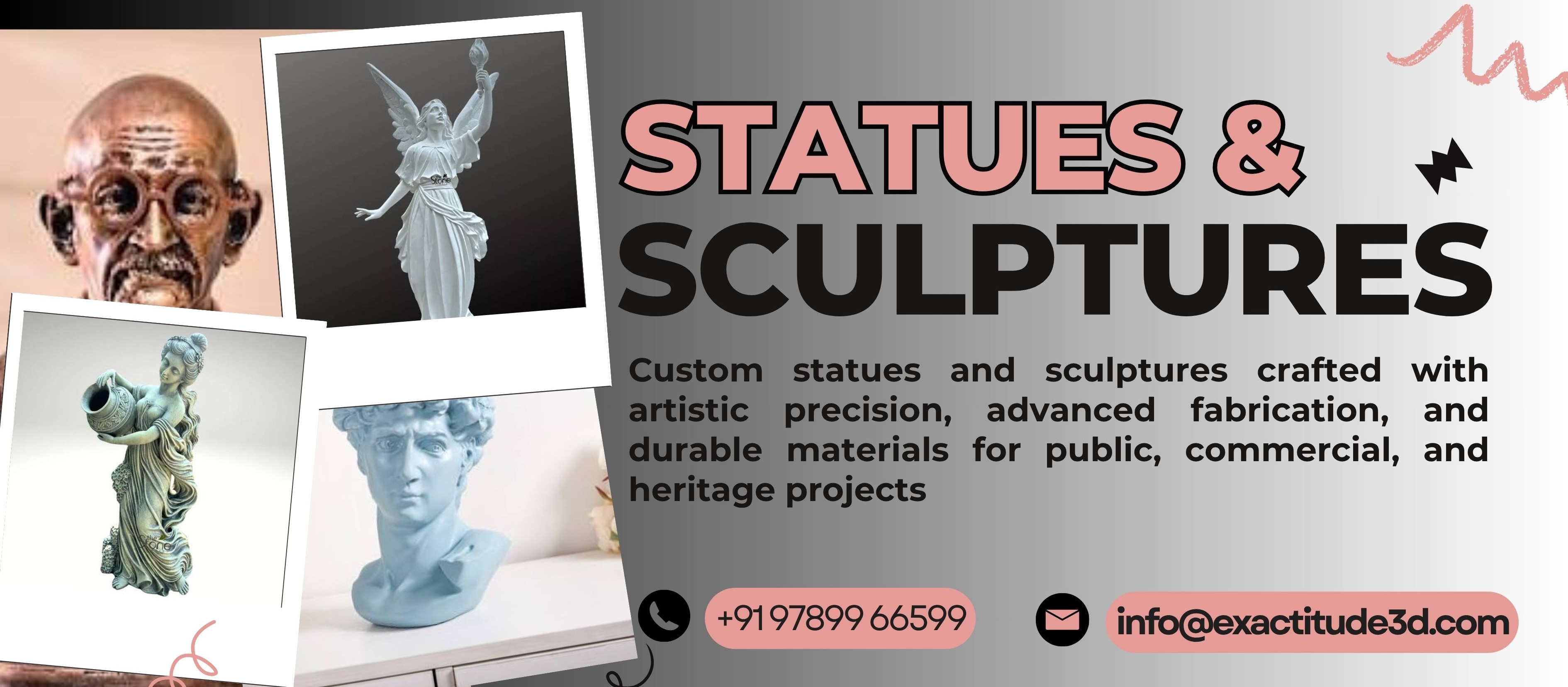
Custom statues and sculptures crafted with artistic precision, advanced fabrication, and durable materials for public, commercial, and heritage projects.
At their core, statues and sculptures are three-dimensional artworks created by shaping, carving, casting, or fabricating materials. While the terms are often used interchangeably, they have a slight distinction:
Statue: A specific type of sculpture that represents a person, animal, or deity, typically at life-size or larger.
Sculpture: A broader, overarching category of 3D art that includes abstract forms, geometric shapes, installations, and relief work alongside representational figures.
Modern Fabrication: Bridging Art & Technology
Traditional sculpting relies heavily on manual chiseling (subtractive) or clay modeling (additive). Today, companies like Exactitude 3D Models combine classical artistry with advanced digital fabrication technologies to achieve unmatched precision:
Digital Sculpting & 3D Scanning: Existing physical subjects or historical figures can be 3D scanned down to a fraction of a millimeter. Artists can also sculpt entirely in digital CAD software to perfect proportions before any physical material is touched.
CNC Carving & 3D Printing: Large-scale CNC milling machines block out massive shapes from stone or dense foam, while industrial 3D printers handle incredibly intricate, complex geometries that would be nearly impossible to carve by hand.
Expert Finishing: The raw fabricated pieces are then cast in durable metals, coated in weather-resistant composites, or meticulously hand-painted to achieve the desired textures and finishes.
Common Applications
Heritage & Cultural Projects: Replicating historical monuments, restoring damaged artifacts, or honoring historical figures in public squares.
Commercial & Corporate Branding: Eye-catching installations for corporate offices, luxury hotel lobbies, or themed environments that make a strong brand statement.
Public Art & Civic Spaces: Large-scale installations for parks, roundabouts, and government buildings designed to withstand outdoor elements for generations.
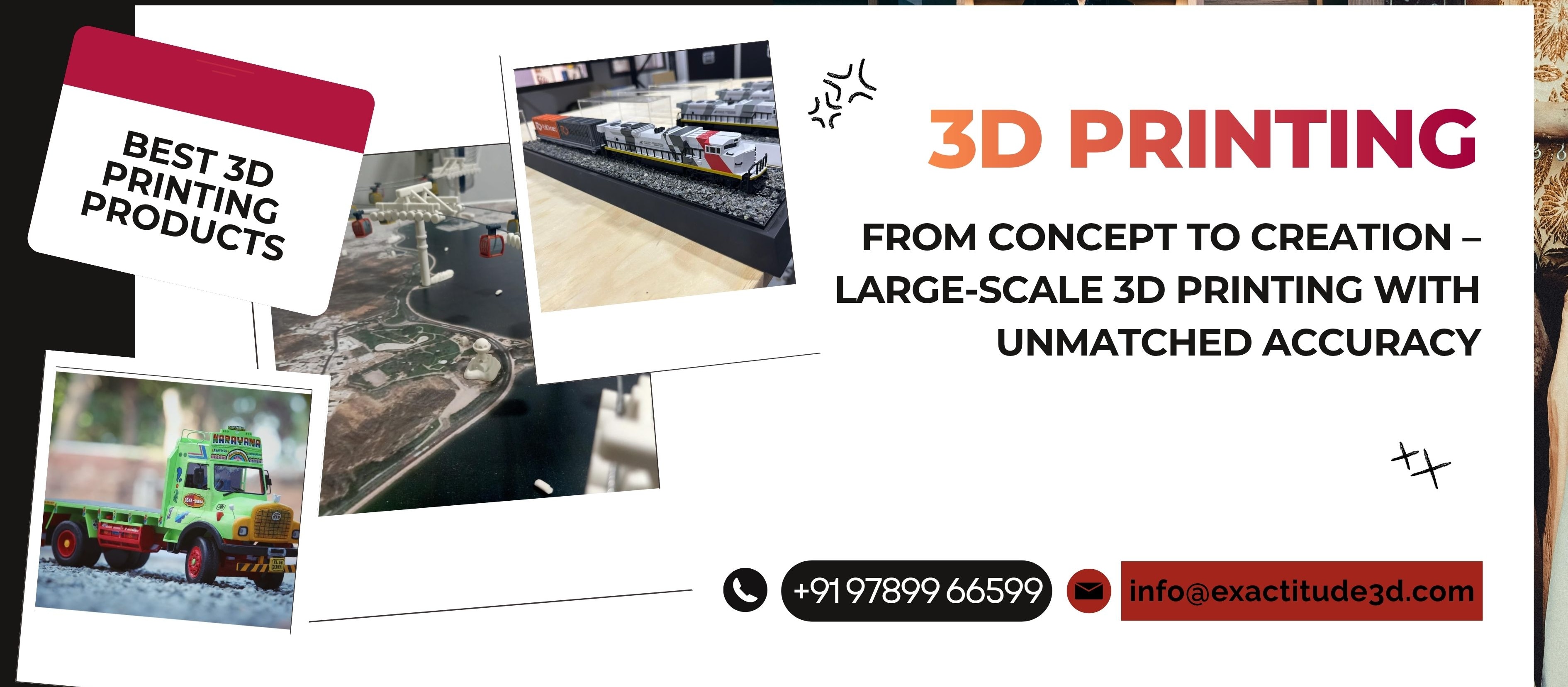
From Concept to Creation – Large-Scale 3D Printing with Unmatched Accuracy.
Unlike traditional manufacturing, which often involves cutting away material from a larger block (subtractive manufacturing like CNC machining), 3D printing builds an object layer by layer from the ground up.
How It Works: From Concept to Creation
The Digital Blueprint: Everything starts with a 3D digital model, usually created using CAD (Computer-Aided Design) software or captured via a 3D scanner.
Slicing the Model: Specialized “slicer” software slices the digital 3D model into hundreds or thousands of horizontal, paper-thin 2D layers. It also generates the path instructions (G-code) for the printer to follow.
Layer-by-Layer Printing: The 3D printer reads the G-code and deposits, melts, or cures material (plastics, resins, metals, or even concrete) layer upon layer until the entire physical object is complete.
Why Use 3D Printing?
Design Freedom: It can easily produce highly complex geometries—like hollow structures or interlocking parts—that are physically impossible to make with traditional molds.
Rapid Prototyping: Designers can tweak a digital file, print it overnight, and hold the physical prototype the next morning.
Cost-Effective for Low Volumes: There is no need for expensive custom molds or tooling. You can print one-off custom parts or small batches economically.
Unmatched Accuracy: Perfect for creating exact physical representations of architectural drafts, machinery, or complex industrial designs.